Team Neemopani
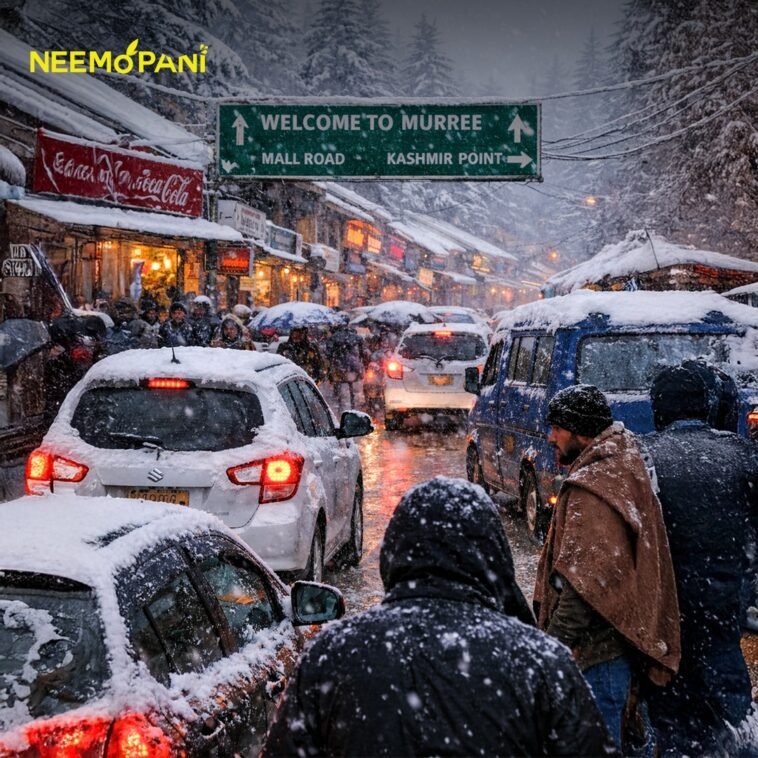
Murree, Pakistan’s beloved hill station, is currently experiencing one of the most intense winter weather events in recent memory, with heavy snowfall bringing the area to a near standstill and prompting significant travel and safety concerns for tourists and residents alike. As snow continues to accumulate and road conditions deteriorate, authorities have taken drastic measures to protect lives and ease the growing disruptions.
Record Snowfall Blankets Murree and Surrounding Areas
In the latest winter spell, Murree has received some of the heaviest snowfall in two decades, with snow depths reportedly reaching up to five feet in isolated locations. This substantial accumulation has not only transformed the scenic hill station into a winter wonderland appealing to many Pakistanis seeking seasonal beauty but also severely disrupted normal life and transportation.
Thousands of vehicles became stranded as snow blocked key thoroughfares, prompting a large-scale clearance and rescue operation. Law enforcement, rescue personnel, and heavy machinery have been working around the clock to free trapped vehicles, clear roads, and assist travelers trying to return home or exit the hill station.
Tourist Ban and Entry Restrictions
In light of the rapidly worsening weather, authorities took the rare step of banning entry to Murree for tourists and non-essential vehicles. District officials emphasized that restricting access was essential to safeguard the public and prevent additional congestion and potential road accidents amid slippery, low-visibility conditions.
Vehicles that had already reached Murree before the ban faced challenges navigating icy routes and deep snow, forcing many to remain on site until authorities could ensure safe passage. Reports indicate that nearly 5,000 vehicles were stranded before ongoing evacuation efforts began to ease the situation.
Murree Expressway: Closure, Partial Opening, and Ongoing Risks
One of the most critical developments in this weather crisis has been the status of the Murree Expressway (N-75), a vital artery connecting Islamabad and Rawalpindi with Murree. Following intense snowfall, authorities initially closed the expressway for general traffic, citing dangerous, slippery road conditions. The closure was aimed at keeping travelers safe and reducing the chance of accidents or severe traffic jams.
As weather conditions slightly improved, the expressway was reopened partially, with law enforcement monitoring and controlling the flow of vehicles. However, officials warned that the road could be shut again if forecasts of continuing rain and snowfall materialize or if traffic pressure increases beyond safe limits. Motorway police reiterated that non-essential travel should be avoided, and commuters should be prepared for abrupt changes in road accessibility.
Travel Recommendations and Safety Measures
In response to the unpredictable and potentially dangerous weather, local authorities including Murree Police and Provincial Disaster Management Authority (PDMA) have issued comprehensive travel advisories aimed at reducing risks for motorists and tourists:
- Postpone non-essential travel until the weather improves.
- Ensure vehicles are winter-ready, including snow chains and sufficient fuel.
- Avoid night travel, when visibility is reduced and temperatures plummet.
- Maintain safe distances between vehicles to prevent collisions on icy roads.
- Use heaters cautiously to avoid carbon monoxide buildup inside vehicles.
These guidelines are designed to reduce accidents, ensure drivers are prepared for delay, and help emergency services reach those in need quickly and safely.
Ongoing Weather Forecast and Alerts
Meteorological authorities have indicated that the snowstorm is part of a broader western weather system affecting northern Pakistan, with continued rain and snowfall expected to hit Murree and the Galyat region over the coming days. This persistent unsettled weather means that conditions on highways and local roads could remain treacherous and unpredictable.
PDMA and local officials maintain that while snow clearance and evacuation operations are underway, further disruptions are possible, and public cooperation will be crucial in maintaining safety and efficient traffic management.
Impact on Local Life and Infrastructure
The effects of this heavy snowfall extend beyond travel, impacting everyday life in Murree and nearby towns. Reports suggest that electricity supply has been disrupted in some areas due to the weather, and internet access is partially affected. Residents and visitors alike are feeling the strain of limited mobility and reduced services as crews work to restore normalcy.
For more news, visit Neemopani.
Local businesses, especially those dependent on tourism, are also feeling the impact. With the ban on entrance and challenging conditions, revenue streams have been temporarily disrupted, although authorities emphasize that safety takes precedence over commercial activity during such extreme weather events.
Winter Weather Challenges in Murree
Murree and the larger Galyat region have a long history of winter weather challenges, particularly during peak snowfall seasons. In previous years, heavy snow and massive influxes of tourists have resulted in traffic jams, stranded vehicles, and, tragically, fatalities due to weather-related incidents. Authorities have since ramped up planning, advisory mechanisms, and rescue capacity to prevent similar crises.
Today’s snowfall event serves as another reminder of the need for careful travel planning in winter and respect for official guidance aimed at preserving public safety.
Safety First as Murree Battles Winter Storm
The 2026 Murree snowfall episode has tested the limits of infrastructure, emergency response systems, and public patience. With record snow depths, restricted travel, and ongoing uncertainties in weather and road access, officials are urging calm and cooperation while prioritizing life and safety above all else.
Travelers planning a visit to Murree within the next few days are strongly encouraged to follow official updates, defer non-essential trips, and prepare thoroughly for winter driving conditions if travel cannot be avoided.
For more information, contact Neemopani.