Team Neemopani
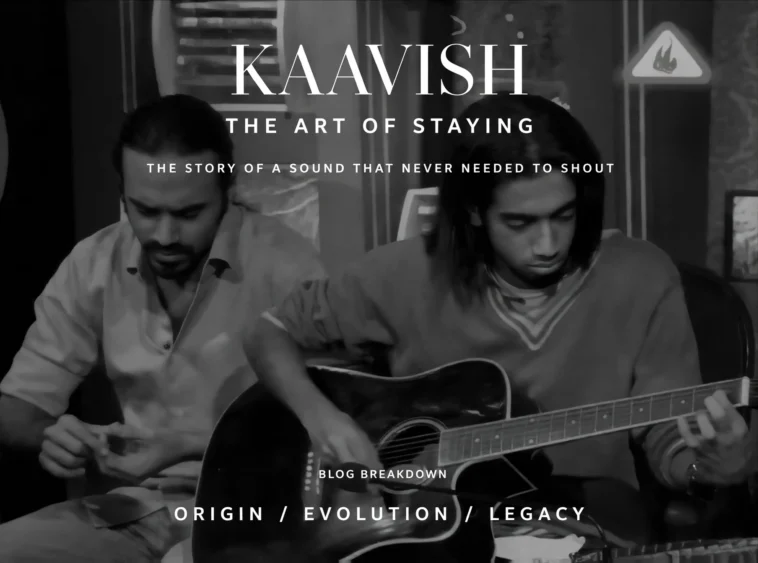
Quietly Timeless: The Unhurried Rise of Kaavish
Modern music moves fast. The industry is obsessed with overnight virality, heavy tour schedules, and constant visibility. For nearly three decades, Kaavish has done the exact opposite. They disappear for years at a time and rarely chase trends. They only release music when a song feels completely lived in. Yet whenever Jaffer Zaidi sits at a piano and Maaz Maudood picks up his guitar, millions of people stop everything to listen.
Their success is more than just “evergreen.” It is deliberate, generational, and unhurried. Their career is a rare musical map. It proves that emotional honesty outlasts internet hype every single time.
Where It Began: Karachi, 1998
The story of Kaavish started in Karachi in 1998. This was long before streaming numbers or social media algorithms dictated what made a hit. Singer, pianist, and composer Jaffer Zaidi teamed up with guitarist Maaz Maudood. Even their name captured their philosophy toward their craft. Kaavish is an Urdu word that translates to “struggle,” “effort,” or “striving.”
In the late nineties and early two thousands, high energy pop and rock bands dominated Pakistan. Kaavish chose restraint instead. They blended South Asian semi classical vocals with acoustic guitar, piano, and deeply poetic Urdu lyrics. Early releases like Bachpan, Choti Khushiyaan, and Tere Pyaar Mein introduced a fresh sound. Their music felt less like a stadium anthem and more like a late night talk with an old friend.
The Patience Behind Gunkali
Many acts rush out albums to chase radio airplay. Kaavish took their time perfecting their debut studio record. Recording began in earnest around 2007. The band weathered lineup shifts along the way. Drummer Raheel Manzar Paul even left right before a planned launch video in late 2008. Finally, the album arrived as Gunkali.
The wait paid off. Gunkali became a modern classic of Pakistani music. It earned Lux Style Award nominations and made Kaavish critical favorites. Tracks like Moray Sayyaan and Piya Dekho Na did not explode overnight. Instead, they seeped into the culture slowly. Older siblings passed the songs to younger ones on burned CDs, MP3 players, and early YouTube uploads.
The Coke Studio Chapter and Silent Years
Between 2011 and 2017, Kaavish cemented their place in the national spotlight. They did this through selective, unforgettable appearances on Coke Studio Pakistan.
- 2011 (Nindiya Re): Their version of Nindiya Re became an instant comfort song worldwide. It showed Jaffer Zaidi’s rare gift for turning a simple lullaby into an emotional gut punch.
- 2015 (Neun La Leya): They returned in Season 8. This track reminded audiences of their classical roots and effortless vocal chemistry.
- 2017 (Faasle): Featuring Quratulain Balouch in Season 10, Faasle became a cultural phenomenon. Jaffer Zaidi wrote and composed the track. It captured the quiet ache of distance with sharp precision, sparking a massive wave of discovery for their older catalog.
True to form, they stepped back from the stage right after. For years, live Kaavish concerts felt almost mythical. Shows were so rare that fans wondered if they would ever hear Bachpan or Faasle live again.
The Renaissance: 2024 to Now
Something remarkable happened during their quiet years. Gen Z discovered their music. Driven by independent streaming, acoustic covers, and word of mouth across Pakistan, India, and Bangladesh, Kaavish quietly gained hundreds of millions of streams. They achieved this without releasing a full second album.
In early 2024, the band finally announced their return to live shows. Ticket frenzies erupted across Lahore, Karachi, Islamabad, and Dhaka. That same year, they teamed up with Abdul Hannan for O Yaara on Coke Studio Season 15. The song built a generational bridge between modern indie voices and the architects of Pakistani melancholy. They also released the poignant single Tairay Naam.
Their creative momentum kept rolling. In April 2026, Kaavish released Intezaar. Written by Jaffer Zaidi, the song kept their signature intimacy intact. However, it shifted slightly toward warmth and hopeful anticipation rather than pure heartbreak. It proved their sound can evolve without losing its soul.
Behind the Melodies: Fun Facts About Kaavish
- Their debut album is named after a specific time of day: Gunkali is not a made up word. It is the name of a traditional morning raga in South Asian classical music. They chose it because its mood balances deep devotion with quiet hope.
- They once appeared on Sesame Street: In 2012, Kaavish made a guest appearance on Sim Sim Hamara. This was the Pakistani adaptation of Sesame Street, bringing their acoustic warmth to a much younger crowd.
- Jaffer Zaidi is a powerhouse behind the scenes: Jaffer does more than front Kaavish. He has served as a music director and producer on Coke Studio, shaping tracks for legends like Saieen Zahoor, Sanam Marvi, and Ali Azmat.
- Maaz Maudood’s musical spark came from a cousin’s gear: Maaz taught himself music in solitude before meeting Jaffer. He learned by experimenting with his cousin’s collection of instruments.
- Their Faasle studio version came out years after the TV hit: Faasle became famous on Coke Studio in 2017. However, Kaavish waited until November 2023 to release their stripped back studio version on YouTube. That version alone went on to pass 32 million views.
- No target demographic, ever: Early on, the band noted they never wrote music for one specific age group. They always aimed to make songs that speak equally to a seven year old and a seventy year old.