Team Neemopani
The 2026 Iran‑Israel War
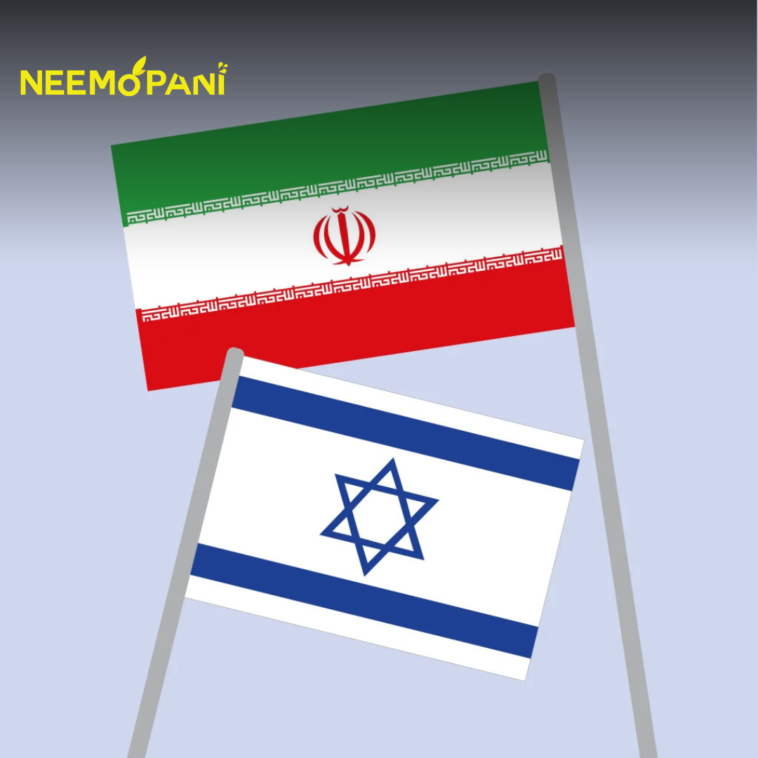
The Middle East has entered a new and perilous era. On February 27, 2026, the long-standing “shadow war” between the Islamic Republic of Iran and the State of Israel collapsed into a direct, high-intensity conflict. Dubbed Operation Epic Fury by the United States and Operation Lion’s Roar by Israel, this campaign has fundamentally altered the regional balance of power in less than a week.
This guide provides an exhaustive breakdown of the conflict, from the assassination of Iran’s Supreme Leader to the looming threat of a global energy crisis.
Timeline of Escalation: February 27 – March 7, 2026
To understand the current crisis, one must look at the rapid-fire events of the last seven days. The escalation did not happen in a vacuum, but the speed of the kinetic phase has caught many global analysts off guard.
It began on February 27, when the U.S. and Israel launched daylight precision strikes across 14 Iranian cities simultaneously. U.S. Central Command (CENTCOM) confirmed the deployment of B-2 stealth bombers and Tomahawk missiles, marking the first time such assets have been used in a coordinated strike on Iranian soil. By February 28, the world was shaken by the news that Iranian state media had confirmed the death of Supreme Leader Ayatollah Ali Khamenei following a strike on his Tehran compound.
The retaliation was swift. On March 1, Iran launched a massive drone and missile barrage targeting Jerusalem and Tel Aviv, alongside U.S. bases in Kuwait, Qatar, and Bahrain. This was followed by March 3, when Hezbollah officially broke the 2024 ceasefire, launching thousands of rockets into northern Israel and prompting a full-scale Israeli ground incursion into southern Lebanon. By March 5, the conflict hit the global wallet: the Strait of Hormuz was effectively closed to commercial traffic. Today, March 7, the conflict has spread as far as the Indian Ocean, with naval engagements reported near the coast of Sri Lanka.
The Death of Khamenei and the Power Vacuum of Iran
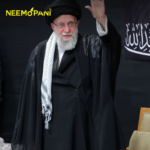
The assassination of Ayatollah Ali Khamenei, who ruled since 1989, is the most significant political event in the Middle East in decades. For nearly forty years, Khamenei was the final arbiter of Iranian policy. His sudden removal has left a gaping hole in the Islamic Republic’s command structure.
Currently, a Transitional Leadership Council has been formed by President Masoud Pezeshkian and Judiciary Chief Gholamhossein Mohseni Ejei. However, intelligence reports suggest that the Islamic Revolutionary Guard Corps (IRGC) is the entity truly steering the ship. This shift toward a more militant, military-led government has led to a “decentralized defense” strategy, where regional commanders are authorized to strike targets without direct orders from a central authority.
Internally, Iran is a tinderbox. While many citizens remain fiercely nationalistic in the face of foreign invasion, others see this as an opportunity for the “regime change” they have sought during student protests throughout early 2026. The fear of “Gaza-fication”—where Iranian cities become permanent battlezones is palpable among the civilian population.
Military Dynamics: Stealth vs. Asymmetry
This war is the first major conflict to showcase the full integration of Artificial Intelligence and stealth technology in a high-intensity environment.
The Coalition’s High-Tech Edge
The U.S. and Israel have relied heavily on stealth dominance. By utilizing F-35 Lightning II jets and B-2 Spirit bombers, the coalition has successfully bypassed Iran’s sophisticated S-300 and S-400 air defense systems. Furthermore, AI-driven logistics have allowed for an unprecedented strike tempo, with over 3,000 targets neutralized in under 170 hours. At sea, the USS Gerald R. Ford and USS Abraham Lincoln carrier strike groups have enforced a strict maritime blockade, limiting Iran’s ability to resupply its proxies by water.
Iran’s “Grey Zone” Retaliation
Despite the air superiority of the coalition, Iran remains lethal through asymmetric warfare. Hezbollah has proven that even under heavy bombardment, it can still disable Israeli Merkava tanks using advanced anti-tank guided missiles (ATGMs). Meanwhile, Iran’s drone flee, specifically the Shahed-series continues to harass U.S. allied bases across the Gulf, forcing expensive interceptions by Patriot missile batteries.
The Global “Hormuz Chokehold” and the Economy
The most immediate global threat is the closure of the Strait of Hormuz. This 21-mile-wide passage is the jugular vein of the global energy market. With 20% of the world’s petroleum passing through it, any disruption is catastrophic.
Energy markets are currently in a state of “controlled panic.” Brent crude prices have already surged past $84 per barrel, but analysts at major firms warn that a sustained blockade could push prices toward $150 or even $200. This isn’t just about gasoline; natural gas prices in Europe have jumped by nearly 40% as Qatari LNG tankers remain anchored, unable to safely exit the Persian Gulf. This “energy shock” threatens to trigger a global recession, potentially undoing all the progress made by central banks to curb inflation over the last two years.
The Humanitarian Toll and Infrastructure Collapse
The human cost of Operation Epic Fury is mounting at a rate that international aid agencies are struggling to track. In Iran alone, death tolls have exceeded 1,300, with some estimates suggesting the number is closer to 2,500 when including military personnel and those trapped in the rubble of industrial centers. Over 100,000 people have fled Tehran, heading toward the mountainous regions in hopes of escaping the nightly air raids.
In Lebanon, the situation is equally dire. The Israeli ground incursion has displaced nearly 200,000 people from the southern border, while Beirut’s southern suburbs (Dahieh) face constant bombardment. Even in Israel, which possesses the world-class Iron Dome defense system, the sheer volume of rockets has led to civilian casualties and significant damage to power grids in Haifa and Tel Aviv.
Diplomatic Deadlock: The Path Forward
As of March 7, there is no clear path to a ceasefire. The U.S. administration has adopted a “Maximum Pressure 2.0” policy, demanding nothing short of the total dismantling of the IRGC. Conversely, Iranian officials have signaled that they are prepared for a “Long War.”
Nations like Indonesia, Pakistan, and the UAE are attempting to mediate, but the geopolitical stakes specifically regarding nuclear proliferation and oil security make a simple peace deal nearly impossible. The world now watches to see if the conflict will settle into a stalemate or if a third party, such as Russia or China, will intervene to protect their interests in the region.
Conclusion
The 2026 Iran‑Israel conflict has transcended a regional dispute to become a systemic shock to the world order. It has impacted everything from the price of bread in Cairo to the cost of heating in London. As we move deeper into March, the central question remains: will this lead to a new Middle East, or will the region be consumed by the flames of a “forever war” that no one can truly win?
For more blogs like this, visit Neemopani.