Team Neemopani
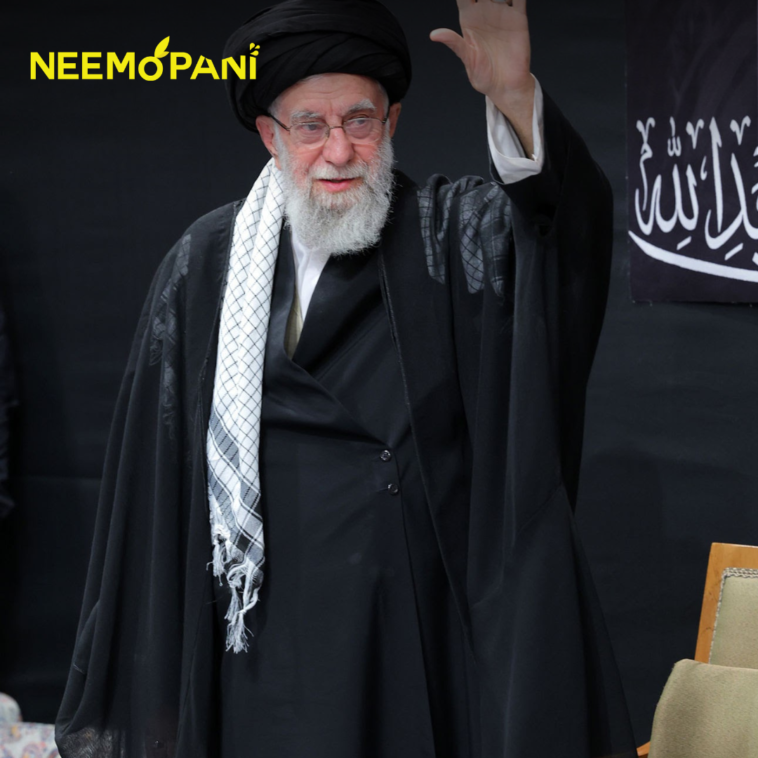
Few political figures shaped modern Middle Eastern politics like Ali Khamenei. As the Supreme Leader of Iran, he held the highest authority in the Islamic Republic for nearly four decades. His leadership influenced Iran’s nuclear ambitions, regional conflicts, domestic policies, and global diplomacy.
Whether viewed as a guardian of Iran’s sovereignty or a symbol of authoritarian rule, one thing is certain: Ali Khamenei’s impact on Iran and the Middle East cannot be ignored.
Let’s explore his life, power, controversies, and legacy in depth.
Early Life of Ali Khamenei
Ali Hosseini Khamenei was born on April 19, 1939, in Mashhad, one of Iran’s most important religious cities. Growing up in a clerical family, he was immersed in Islamic scholarship from a young age.
He studied in Mashhad and later in Qom, Iran’s leading center of Shi’a religious education. During this time, he became influenced by revolutionary religious thinkers who opposed the Shah of Iran.
In the 1960s and 1970s, Iran was politically tense. Many clerics and activists opposed Shah Mohammad Reza Pahlavi’s Western-leaning policies. Khamenei joined the movement inspired by Ayatollah Ruhollah Khomeini.
Because of his activism, he was arrested multiple times by the Shah’s secret police. These experiences shaped his deep distrust of Western governments, a theme that would define his future leadership.
Post-Revolutionary Iran
The 1979 Iranian Revolution transformed Iran from a monarchy into an Islamic Republic. After the Shah fled the country, Ayatollah Khomeini returned from exile and became Iran’s Supreme Leader.
Khamenei quickly rose within the new political system.
He served in:
- The Islamic Revolutionary Council
- Iran’s Parliament
- As Tehran’s Friday Prayer leader
In 1981, he survived an assassination attempt that severely injured his right arm. That event strengthened his reputation among revolutionaries as a committed and resilient leader.
Soon after, he was elected President of Iran, serving from 1981 to 1989 during the devastating Iran-Iraq War. The conflict deeply influenced his views on security, defense, and self-reliance.
Becoming Supreme Leader of Iran in 1989
When Ayatollah Khomeini died in 1989, Iran faced a leadership crisis. The constitution originally required the Supreme Leader to be a high-ranking religious authority. At that time, Khamenei did not hold the highest clerical rank.
However, the Assembly of Experts amended the constitution and appointed him as Supreme Leader of Iran.
This marked a turning point.
As Supreme Leader, Khamenei gained control over:
- The armed forces
- The judiciary
- State broadcasting
- Major economic foundations
- Appointment of key political figures
Unlike Iran’s president, who is elected, the Supreme Leader holds ultimate authority. This made Ali Khamenei the most powerful political and religious figure in the country.
Ali Khamenei’s Domestic Policies
Over time, internal tensions in Iran grew.
Major protests erupted in:
- 1999 (student protests)
- 2009 (Green Movement)
- 2019 (fuel price protests)
- 2022 (following the death of Mahsa Amini)
Each time, the government responded firmly, emphasizing stability and national security.
Supporters argue Khamenei protected Iran from foreign interference and internal chaos. Critics argue he limited political freedom and suppressed dissent.
Meanwhile, Iran’s economy struggled under international sanctions, especially due to its nuclear program. Inflation, unemployment, and currency decline affected daily life for many Iranians.
Despite these challenges, Iran developed advancements in:
- Military technology
- Regional strategic networks
- Nuclear energy capabilities
- Scientific research sectors
Khamenei consistently emphasized “resistance economy” encouraging self-sufficiency and reduced dependence on Western powers.
Foreign Policy Strategy
Ali Khamenei’s foreign policy is shaped like regional geopolitics.
Nuclear Program
Iran’s nuclear program became a central global issue. Western governments accused Iran of pursuing nuclear weapons. Iranian officials maintained the program was for peaceful purposes.
The dispute led to:
- Severe economic sanctions
- Diplomatic negotiations
- The 2015 nuclear agreement (JCPOA)
- Continued tensions after U.S. withdrawal
Khamenei publicly supported nuclear advancement while expressing skepticism toward negotiations with Western governments.
Regional Influence
Under his leadership, Iran expanded influence through alliances in:
- Syria
- Lebanon
- Iraq
- Yemen
This strategy strengthened Iran’s regional position but intensified rivalry with the United States, Israel, and Gulf states.
His foreign policy was built around one principle: resistance to Western dominance and preservation of Islamic revolutionary ideals.
Death of Ali Khamenei
According to international reporting, Ali Khamenei died in February 2026 at age 86.
The news shocked Iran and the international community. Iran declared a national mourning period, and regional tensions immediately escalated.
His death raised urgent questions:
- Who will become the next Supreme Leader?
- Will Iran’s policies shift or continue?
- Could internal power struggles emerge?
The transition of leadership in Iran is highly significant because the Supreme Leader holds ultimate constitutional authority.
Observers worldwide watched closely as Iran entered a new political phase.
Legacy of Ali Khamenei
Now, when we pause and reflect on Ali Khamenei’s legacy, it becomes clear that perspective shapes the answer. As the long-serving Supreme Leader of Iran, he is viewed by supporters as a steadfast protector of Iranian sovereignty, a firm defender of Islamic governance, and a leader who consistently resisted foreign pressure, particularly from Western powers. Critics, however, argue that Ali Khamenei ruled with authoritarian control, suppressed political dissent, and contributed to Iran’s international isolation. Objectively speaking, his leadership significantly shaped Iran’s nuclear development, expanded its regional influence across the Middle East, and defined Iran-U.S. relations for decades. Few figures in modern Iranian history exercised such prolonged authority or left such a deep imprint on domestic and foreign policy. Ultimately, Ali Khamenei’s era leaves behind complex questions about governance, ideology, reform, and the future direction of the Islamic Republic.
For more blogs like this, visit Neemopani.