Team Neemopani
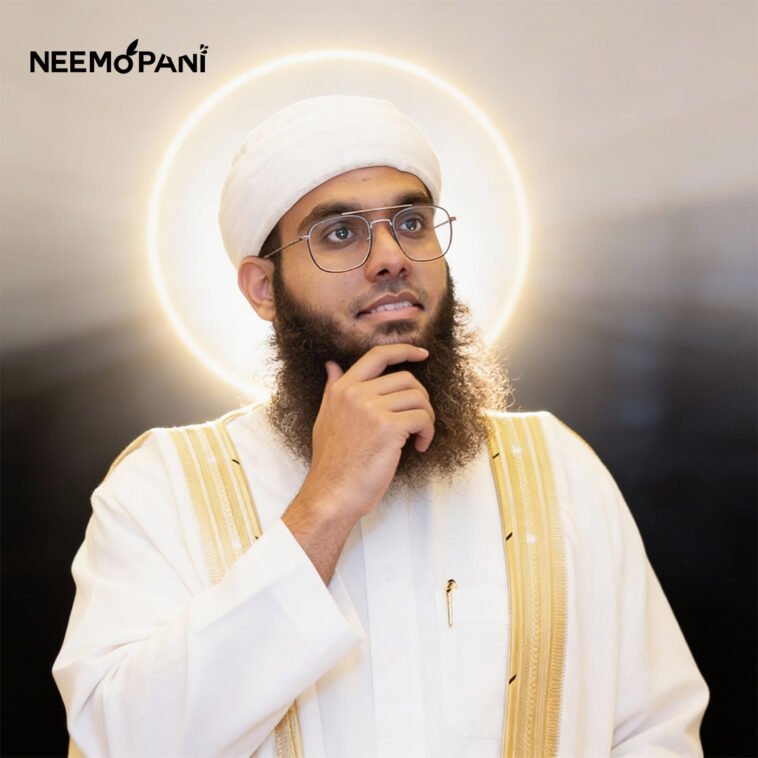
In an era, fraught with skepticism and soul-searching, a spirited debate on the existence of God has captured global attention and it’s Mufti Shamail Nadwi whose articulate defense of belief has resonated powerfully with Muslims around the world. The event, titled “Does God Exist?”, was held at the Constitution Club in New Delhi and featured a rare intellectual exchange between acclaimed atheist poet-lyricist Javed Akhtar and the respected Islamic scholar Mufti Shamail Nadwi. What began as an academic discussion quickly evolved into a heartfelt moment of affirmation for believers everywhere.
From the outset, the contrast in worldviews was clear. Akhtar, known for his eloquent critiques of religion, anchored his argument in moral reasoning, especially pointing to human suffering as a challenge to belief in a benevolent, omnipotent deity. Using harrowing examples of conflict and pain, he questioned how a compassionate God could permit such horrors.
However, it was Mufti Shamail’s response rooted in centuries of theological thought, clarity of conviction, and deep empathy that changed the tone of the conversation. Rather than dismissing Akhtar’s concerns, he acknowledged the reality of suffering and used it to illuminate, rather than diminish, the purpose of faith. At the heart of his argument was a timeless message: evil and cruelty are consequences of human free will not of divine intent. “The Creator has created the possibility of evil, but He is not evil,” he reminded the audience, placing moral responsibility back into the hands of humanity.
This emphasis on free will was pivotal. Many viewers felt that while suffering is undeniably real, its existence does not negate God, instead, it points to human agency. Mufti Shamail’s argument reframed the narrative from one of divine culpability to one of human accountability, a perspective deeply rooted in Islamic spirituality, philosophical theology, and ethical responsibility. In doing so, he offered comfort and clarity to believers grappling with age-old questions about pain, purpose, and moral justice.
The scholar also took great care to distinguish between the roles of science and faith, a nuance that resonated with many on social media. While science explains physical processes, he explained, it cannot answer the metaphysical question of why the universe exists or what lies beyond material observation. Nor can it speak of the spiritual dimensions of existence that offer meaning beyond empirical data. For millions who feel that faith and reason are not mutually exclusive, this balanced perspective was refreshing, grounding, and intellectually satisfying.
Perhaps the most powerful moment for believers worldwide was when Mufti Shamail challenged the notion that uncertainty invalidates belief. Instead, he invited the audience to see belief not as blind acceptance, but as a reasoned choice supported by lived human experience, spiritual insight, and logical coherence. Uncertainty, he suggested, is not a vacuum that discredits God, but a space where faith grows deeper and more deliberate.
Social media reactions underscored the impact of his words. Within hours of the debate being livestreamed, clips and reflections spread rapidly, with thousands praising Mufti Shamail’s approach. Many Muslims shared heartfelt testimonies describing how his arguments helped reaffirm their own faith or inspired a fresh appreciation for spiritual reflection. Across Facebook, Twitter, and Instagram, believers expressed pride and gratitude that their faith had been defended not merely with emotion, but with intellectual depth and eloquent reasoning.
The global Muslim community’s response was particularly noteworthy people from South Asia, the Middle East, Africa, Southeast Asia, and beyond voiced unified admiration. Many lauded Mufti Shamail’s calm demeanor, respectful tone, and unwavering commitment to both logic and spirituality. In more than one instance, viewers describe feeling hopeful after years of disillusionment or internal conflict about faith, a testament to the emotional as well as intellectual power of his words.
It wasn’t just orthodox believers who found value in Mufti Shamail’s contribution. Several interfaith and philosophical commentators praised his insistence that questions about God are not only permitted but essential. They highlighted how his respectful engagement with Akhtar exemplified how spiritual discourse can be both rigorous and compassionate, pointing to a future in which public dialogues around faith are less about confrontation and more about insight.
In contrast, some observers noted that while Akhtar’s critiques sparked important ethical discussions, it was Mufti Shamail’s spiritual grounding and philosophical framing that ultimately captivated the wider public. Many argued that his ability to connect deep theological concepts to everyday human experience, without dismissing genuine struggles, is why so many feel he “won the debate” in the court of public opinion.
Across the Muslim world, this debate has become more than a moment; it’s a movement, a reaffirmation that spirituality and religious sensibilities still hold profound meaning in the modern age. And in a cultural landscape often marked by division and doubt, Mufti Shamail’s success in winning hearts underscores that faith, when defended with reason and respect, still resonates deeply.
In the end, while questions about God’s existence may never be fully settled in debate halls or online forums, what this remarkable exchange truly revealed is that spirituality, thoughtfully articulated, still triumphs in the hearts of believers everywhere.
Visit Neemopani for more articles like this!