Web Author
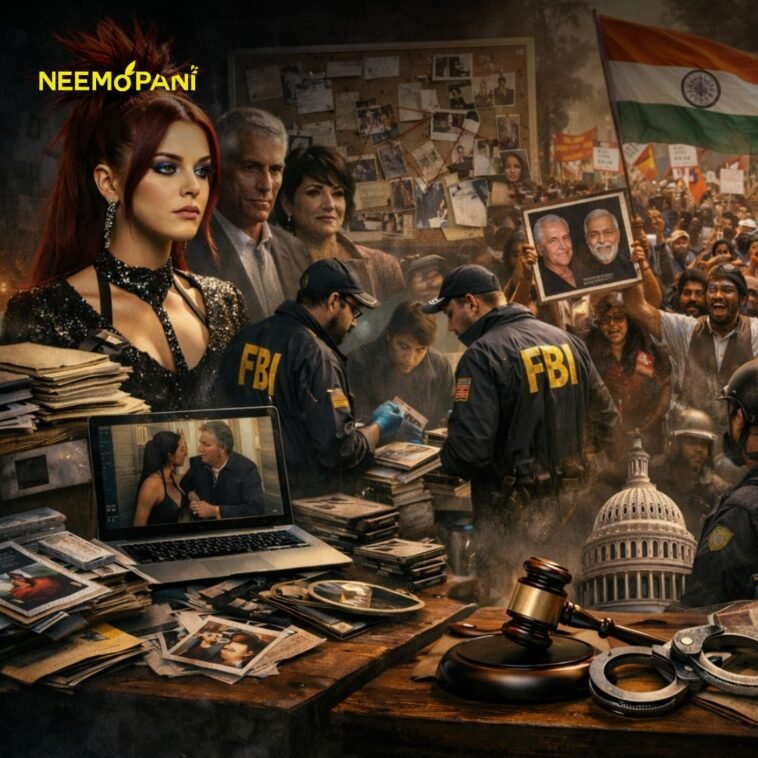
The release of the final, unredacted tranche of the “Epstein Files” in early 2026 has marked a watershed moment in the intersection of law, celebrity culture, and international diplomacy. Mandated by the Epstein Files Transparency Act (EFTA), which was signed into law in late 2025, the U.S. Department of Justice (DOJ) has now made public approximately 3.5 million pages of evidence, including 2,000 videos and 180,000 images.
Unlike previous leaks, the 2026 disclosures go beyond the infamous “flight logs” to reveal the granular, day-to-day communications between the convicted sex trafficker and the global elite. The fallout has been swift and unforgiving, leading to high-profile resignations in Hollywood and mass civil unrest in South Asia.
The Case of Chappell Roan
On February 9, 2026, pop sensation Chappell Roan sent a clear message to the entertainment industry by officially severing ties with Wasserman Music. The decision followed the unsealing of suggestive 2003 email exchanges between the agency’s CEO, Casey Wasserman, and Ghislaine Maxwell.
Accountability Over Representation
Roan’s exit is not merely a contract termination; it is a cultural indictment. In her public statement, Roan emphasized that artists have a “duty to protect” their teams and cannot be expected to “overlook actions that conflict so deeply with our own moral values.”
The emails in question ranging from “flirtatious” banter to requests for private massages have placed Casey Wasserman under immense scrutiny. As the chairman of the LA28 Olympic Committee, Wasserman now faces bipartisan calls to step down from his civic duties, despite his insistence that he never had a direct business relationship with Jeffrey Epstein.
The Domino Effect
Roan is not alone. Several other prominent acts, including the bands Wednesday, Sylvan Esso, and Beach Bunny, have joined the exodus from Wasserman. This collective action represents a fundamental shift in the music industry, where “talent power” is being used to dismantle the protection traditionally afforded to powerful executives.
The New Delhi Protests
While the West grapples with Hollywood scandals, the Epstein files have ignited a significant political crisis in India. The “Transparency Act” disclosures included several unverified memos from 2017 in which Epstein boasted about his alleged “influence” over Prime Minister Narendra Modi’s landmark visit to Israel.
The MEA’s “Trashy Ruminations” Defense
India’s Ministry of External Affairs (MEA) has been forced into a defensive posture, officially dismissing Epstein’s emails as the “trashy ruminations of a convicted criminal.” The government maintains that Epstein was a “prestige-seeker” who frequently name-dropped world leaders to inflate his own standing.
However, the political opposition in India, led by the Congress Party, has seized on these documents to demand a full inquiry. The ensuing protests in New Delhi have drawn thousands, reflecting a broader global demand for transparency regarding how “shadow fixers” like Epstein operated within the highest echelons of government.
Analyzing 2026 Data
The sheer volume of the 2026 release of roughly 300 gigabytes of data has overwhelmed journalists and legal experts alike. A thematic analysis of the documents reveals three core areas of concern:
- Institutional Grooming: Epstein spent decades using “philanthropic” donations to science and education (such as his ties to Noam Chomsky and Martin Nowak) to build a mask of legitimacy.
- The Enablers’ Network: The files suggest that Epstein’s power wasn’t just in his wealth, but in a “hub” of fixers who facilitated introductions to billionaires and diplomats long after his 2008 conviction.
- Surveillance Culture: The inclusion of over 2,000 videos suggests that Epstein maintained a rigorous surveillance apparatus across his properties, though many of these remain under heavy redaction to protect the privacy of potential victims.
The Legal Road Ahead: Civil Liability and New Charges
Legal experts, including prominent survivor advocate Brad Edwards, suggest that the 2026 files provide “actionable intelligence.” Because federal law has no statute of limitations for sex crimes involving minors, the evidence found in these emails could lead to:
- New Indictments: If the documents reveal specific instances of facilitation or cover-ups by third parties.
- Civil Litigation: Corporations and agencies (like Wasserman or certain boutique hedge funds) could face massive lawsuits for “failing to protect” or actively enabling a known predator.
- Congressional Inquiries: Members of Congress, including Rep. Thomas Massie, continue to push for the removal of remaining redactions, particularly those concerning “politically exposed persons” (PEPs).
Conclusion
The 2026 Epstein Files have done more than just exposed names; they have exposed a systemic failure. The scandal proves that wealth and social status created a “shield of invisibility” that allowed a criminal enterprise to flourish in plain sight for nearly thirty years.
As artists like Chappell Roan lead the way in demanding accountability, and citizens from New Delhi to New York take to the streets, the message is clear: the era of “elite self-interest” is being challenged by a new age of digital activism and survivor-led justice. The “road ahead” is no longer about discovering what Epstein did, it is about ensuring that the institutions that protected him are held to the same standard as the law itself.
For more Khatti Meethi news around the world, visit Neemopani.